
Why the Kitchen Floor Beats the Internet
Most pet owners only look closely at their dog or cat when something already feels wrong. By then we are often playing catch-up. The quiet truth from sixteen years of exam rooms is that the best medicine usually starts with someone noticing a small change early—before it becomes a big one.
You do not need a stethoscope, a lab, or a veterinary degree. You need five focused minutes once a month on a surface your pet already trusts: the kitchen floor. I have taught this exact routine to hundreds of clients. The ones who stick with it catch problems while they are still easy and inexpensive to address. The ones who rely on “he seems fine” sometimes walk in with stories that started months earlier.
This is not a replacement for real veterinary care. It is the home version of what I do in the first sixty seconds of an appointment—only slower and calmer, with better lighting and no white-coat pressure.
The Ground Rules Before You Start
Pick the same weekend day each month so it becomes habit.
Choose a time when your pet is relaxed, not right after a zoomie session or a meal.
Keep the tone boring and positive. Treats help. Drama does not.
Write down what you find in your phone or a simple note. Trends matter more than any single observation.
If anything feels clearly abnormal—pale gums, labored breathing, sudden lameness, bloated belly—stop and call your vet. This routine is for baseline monitoring, not for diagnosing emergencies.
Ready? Five minutes. Kitchen floor. Let’s go.
Minute 1: The Full-Body Once-Over
Have your dog stand or your cat sit. Run both hands slowly from nose to tail tip, then down each leg.
You are feeling for new lumps, scabs, thin spots in the coat, heat in a joint, or muscle loss over the spine and hips. Most owners are shocked the first time they find a small skin tag or a fatty lump they had never noticed. That is the point. Early discovery turns “What is this?” into “We’ve been watching this for three months and it hasn’t changed.”
Pay special attention to the armpits, groin, and under the tail. Those spots hide things.
Minute 2: Eyes, Ears, Nose, Mouth
Eyes: Clear and bright? Any redness, cloudiness, excessive tearing, or squinting? A little sleep in the corners is normal. Thick green discharge or a suddenly cloudy eye is not.
Ears: Lift the flap. The skin should be pale pink and mostly clean. A small amount of brown wax can be normal for some dogs. Foul smell, heavy debris, or head shaking means we need to look closer at the clinic.
Nose: Usually cool and moist is fine; dry is not automatically bad. Crusting, bleeding, or colored discharge deserves a note.
Mouth: Gently lift the lips. Gums should be bubble-gum pink (or the normal pigmented color for your pet). White, gray, or bright brick-red gums are worth a same-day call. While you are there, glance at the teeth. Tartar builds slowly; broken teeth and red, bleeding gum lines do not fix themselves.
Minute 3: Skin and Coat Check
Part the hair in a few places along the back and sides. You are looking for fleas (tiny dark specks that turn red on a wet paper towel), dry flakes, redness, or thinning. Run your fingers against the grain. If your pet has a double coat, get down to the skin.
Cats often hide problems under a still-shiny topcoat. Dogs with skin allergies usually show the first signs on the belly, armpits, or paws. Catching it early means simpler treatment and less misery.
Minute 4: Paws, Nails, and Hydration
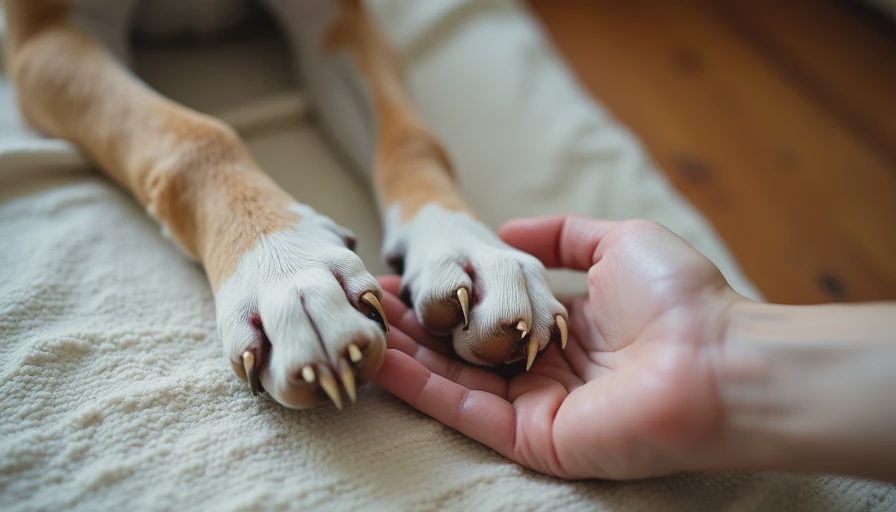
Pick up each paw. Look between the pads and toes for redness, foreign objects, or excessive licking residue. Nails should not be curling into the pads. If you hear the nails clicking loudly on the floor every step, they are probably too long.
Hydration check—skip the old “skin tent on the neck” as your only method. It is late-stage and easy to misread. Better home metrics:
Feel the gums: they should be slick, not sticky.
Look at the saliva: thick and ropy can mean the pet is behind on water.
Resting respiratory rate: count breaths for 15 seconds while the pet is deeply relaxed, then multiply by four. Know your pet’s normal number (usually 15–30 for dogs, similar or a bit higher for cats). A consistent rise is useful information.
Minute 5: Weight-Feel and Energy Snapshot
Run your hands along the ribs. You should feel them easily under a thin layer of fat, like the back of your hand. If you have to dig, the pet is carrying extra weight. If the ribs and spine bones feel sharp, we may be under weight.
Then just watch for thirty seconds. Get-up ease, tail position, interest in a treat or toy. You know your animal’s normal better than any scale. A subtle drop in enthusiasm is often the first thing owners notice in hindsight.
Write three quick notes: weight-feel (ideal / a little heavy / a little thin), anything new, and overall energy (same / slightly off). That is your home chart entry.
How This Routine Actually Changes Outcomes
I have had clients find early mammary lumps, catch evolving dental disease before it became a full extraction, notice the first signs of neck pain, and spot weight creep while it was still easy to reverse. None of those discoveries required special equipment. They required attention paid on purpose once a month.
The kitchen floor is perfect because it is neutral territory. No car ride, no other dogs barking, no stress panting. You get a cleaner read on how your pet really feels.
Making It Stick Without Turning It Into a Chore
Pair it with something you already do—Sunday coffee, the day you change the bed sheets, the first of the month. Keep a simple note template on your phone. After three or four months you will have a personal baseline that is more useful than any generic internet checklist.
If you find something that worries you, take a clear photo and a short video of the area or the gait. Then call your clinic. You will walk in with better information than “I just feel like something’s off,” and that makes my job and your pet’s care both easier.
This is the quiet end of veterinary medicine—the part that happens before the white coat and the stainless-steel table. Five minutes. Once a month. Kitchen floor.
Let the chart do the talking—even when the chart is the one you keep at home.


No letters yet — be the first to write.