
The Facebook Post That Still Shows Up in My Exam Room
Every few months the same screenshot lands in my inbox or gets held up on a phone across the exam table. A dramatic graphic. A Golden Retriever looking soulful. Bold text claiming grain-free dog food is silently destroying hearts. Comments underneath range from “I switched immediately” to “Big Pet Food is covering it up.”
I get why it spreads. Dilated cardiomyopathy (DCM) is a real and serious disease. When a diet association appears, people understandably want a clear villain. The problem is that the actual data is messier, more limited, and far less cinematic than the posts.
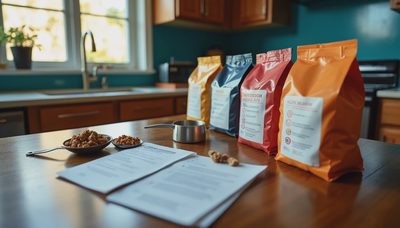
So let’s put the chart in the middle of the table and look at what we actually know in 2026.
Quick Recap: How This Story Started
Around 2018 the FDA began receiving elevated reports of DCM in dogs that were not the typical predisposed breeds (Dobermans, Boxers, Great Danes, etc.). Many of those dogs were eating diets labeled “grain-free” and heavy in legumes—peas, lentils, chickpeas—or potatoes as main ingredients. The agency issued updates, researchers started looking closer, and the internet did what the internet does: turned a signal into a full-scale panic.
By the early 2020s some brands reformulated. Some owners switched back to grain-inclusive foods. A portion of the reported cases improved after diet change. Other cases did not. The story never resolved into a simple “grain-free equals heart failure” headline, yet the Facebook version of the story stayed frozen in 2019.
What the Evidence Actually Shows

Here is the part most viral posts skip.
Association is not the same as proven causation.
Multiple studies and the FDA’s own updates found a signal—more DCM reports in dogs eating certain grain-free, legume-rich diets than expected. That signal is real and worth taking seriously. What we still lack is clean, large-scale proof that the diets directly cause the disease in otherwise healthy dogs across the board.
Taurine is part of the conversation, but not the whole story.
Some affected dogs had low blood taurine levels and improved with taurine supplementation plus diet change. Others had normal taurine and still developed DCM. Golden Retrievers appeared over-represented in some data sets. Breed genetics, individual metabolism, and diet formulation all seem to interact. The picture is multifactorial, not a single-ingredient smoking gun.
Many dogs eat grain-free food for years with normal echocardiograms.
I see them every week. That does not mean the risk is zero. It does mean the absolute risk for any individual dog is still low, and fear-based blanket statements oversell the danger.
Diet change has helped some dogs.
In a subset of cases, switching away from the implicated formulations (often those with high pulse-ingredient inclusion) and adding taurine led to improved heart function on follow-up ultrasounds. That clinical response is one of the stronger pieces of evidence that diet can be a contributing factor in susceptible animals.
The research is still incomplete.
Controlled, long-term prospective studies are expensive and slow. We have case series, retrospective looks, and some metabolomic work, but we do not yet have the definitive trial that isolates every variable. Good science takes time. Social media does not.
How I Actually Handle This in the Exam Room
When an owner brings up the Facebook post, I do not lecture. I open the chart and the diet history.
First question: What is the dog actually eating, and for how long? Brand, formula, main ingredients.
Second: Any clinical signs—coughing, exercise intolerance, collapsing, unexplained weight loss?
Third: Breed and family history.
Fourth: Has anyone ever listened to the heart carefully or run a pro-BNP blood test or echocardiogram?
If the dog is asymptomatic, eating a grain-free diet, and otherwise healthy, I usually recommend:
A baseline cardiac assessment (at minimum careful auscultation and pro-BNP; echocardiogram if the owner wants higher certainty or the breed is higher risk).
A conversation about switching to a diet that meets WSAVA guidelines or at least one that is not legume-heavy as the primary energy source.
Monitoring rather than panic.
I start with the affordable, lower-drama option. An echocardiogram is the gold standard for structure and function, but it is not the first tool for every single dog whose owner saw a scary post. We climb the ladder based on risk and findings, not based on internet volume.
Practical Takeaways You Can Use Today
Read the ingredient list, not just the front of the bag. “Grain-free” is a marketing term. What matters more is whether legumes or potatoes dominate the top ingredients and whether the company does feeding trials and employs veterinary nutritionists.
Know your dog’s baseline. If you are worried, ask your vet for a thorough heart listen and consider a pro-BNP. It is not perfect, but it is a reasonable screening step before jumping to imaging.
Diet change is reasonable; terror is not. Switching a healthy dog to a well-formulated grain-inclusive or carefully formulated grain-free diet is low-risk. Throwing out every bag in the house at midnight after reading comments is unnecessary.
Watch the dog, not just the label. Energy level, resting respiratory rate, cough, and ability to exercise still matter more than any single marketing claim.
Let the individual chart lead. A Doberman with a family history of DCM is a different conversation from a mixed-breed dog with a normal exam and no clinical signs. One-size-fear does not help either of them.
The Bigger Pattern This Episode Reveals
The grain-free DCM story is a perfect case study in how health information travels now. A legitimate scientific signal appears. Early data are incomplete. Social media freezes the most alarming interpretation in place. Nuance dies in the comments. Owners arrive at the clinic carrying certainty that the evidence does not fully support.
My job is not to defend any particular diet philosophy. My job is to keep the decision proportional to the actual risk and the actual dog in front of me. That is why this category exists. Proof, not panic. Charts before conclusions.
If your dog is currently eating a grain-free formula and you are losing sleep, bring the bag or a photo of the ingredient list to your next visit. We can look at it together, decide whether a cardiac screen makes sense, and choose a path that matches the evidence instead of the algorithm.
The studies are still evolving. The fear does not have to.
Let the chart do the talking.



No letters yet — be the first to write.