
The Moment the Appointment Feels Finished
The exam is done. The plan has been explained. The dog is already tugging toward the door or the cat is back in the carrier muttering threats. Most owners gather their keys and say some version of “Okay, got it.” A few ask about cost or scheduling. Almost no one asks the question that would save the most confusion later.
After sixteen years of watching what happens after people leave, I can tell you the single most useful question an owner can ask before they walk out:
“What exactly should I be watching for at home, and when do you want me to update you?”
It sounds simple. It is not the question most people think to ask. Yet the answer turns a one-way set of instructions into a clear feedback loop.
Why This Question Matters More Than It Seems
A large percentage of the follow-up calls and urgent messages I receive are not true emergencies. They are owners who left with a plan but without a shared definition of success, failure, or “call me.” They are not sure whether the soft stool on day three is expected or a problem. They do not know whether the mild limp that is still present on day five means the rest protocol is working or failing. They wait, worry, and then message at 8 p.m. on a Sunday.
When we answer that one question clearly before anyone leaves the room, those gray zones shrink.
What a Good Answer Sounds Like
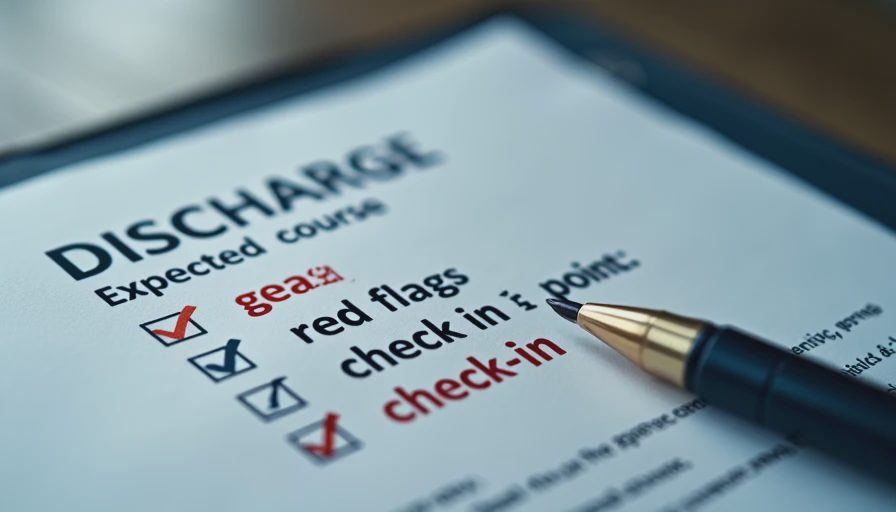
A complete answer has three parts:
The expected course “I expect the coughing to decrease over the next five to seven days. Mild gagging after activity can still happen in the first few days.”
The specific red flags “If the cough becomes productive with yellow or green material, if resting respiratory rate goes above 40, or if she stops eating, call the same day.”
The planned check-in point “Send a short update text or portal message on day four either way—even if things look good—so we know whether to adjust.”
When those three pieces are spoken out loud and, ideally, written on the discharge summary, both sides leave with the same map.
How I Try to Offer It Even When No One Asks
I have learned not to wait for the question. At the end of most appointments I now say some version of: “Here’s what I expect to see at home, here’s what would change the plan, and here’s when I’d like to hear from you.” Then I pause. That pause is where owners add the details that matter to their household—the roommate who might not have heard the plan, the weekend trip, the other pet who shares food.
The owners who look relieved at that moment are usually the ones who have been burned before by vague instructions.
The Related Questions That Also Help
If you only ask one thing, ask the main question above. If there is time for more, these are high-value follow-ups:
“What is the most important part of this plan for me to get right?”
“What can wait until our recheck, and what should not wait?”
“If I only remember three things from today, what should they be?”
Each of these forces the plan into clearer priorities. Veterinary appointments contain a lot of information. Prioritization is a clinical skill; owners should not have to invent it alone.
What This Looks Like in Real Cases
A dog on strict rest for a mild sprain: the owner leaves knowing that toe-touching limping on day three is still acceptable, but non-weight-bearing or increasing pain is not, and that a progress video on day five is welcome.
A cat starting a new urinary diet: the owner leaves knowing that one soft stool during transition is common, but repeated vomiting or complete refusal to eat for more than twenty-four hours means we adjust sooner.
A senior pet with early heart disease: the owner leaves knowing the target resting respiratory rate, the signs that would prompt an earlier recheck, and the date we already expect to re-evaluate.
In each case the medical plan is the same. The difference is that the owner now has a shared definition of “working” and “not working.”
Why This Belongs in the Exam Room Category
The best clinical reasoning in the world is only half complete if it stays inside the clinic. The other half happens at home, in the days and weeks after the appointment. Closing that loop is part of the medicine. The question above is the simplest tool I know for making sure the loop actually closes.
You do not need to be confrontational or anxious to ask it. You can ask it in the same calm tone you would use to confirm a medication dose. Most veterinarians will welcome the chance to make the plan clearer. The ones who do not may be telling you something useful about communication style.
The Quiet Benefit for Everyone
Owners leave less worried.
Veterinarians receive fewer vague “I’m not sure if this is okay” messages.
Pets get earlier adjustments when the plan is not working and less unnecessary intervention when it is.
That is a better outcome on every side of the table.
Next time the appointment feels like it is wrapping up, try the question. The answer you receive is often the most practical takeaway of the whole visit.
Let the chart do the talking—and make sure the chart includes what happens after you walk out the door.



No letters yet — be the first to write.