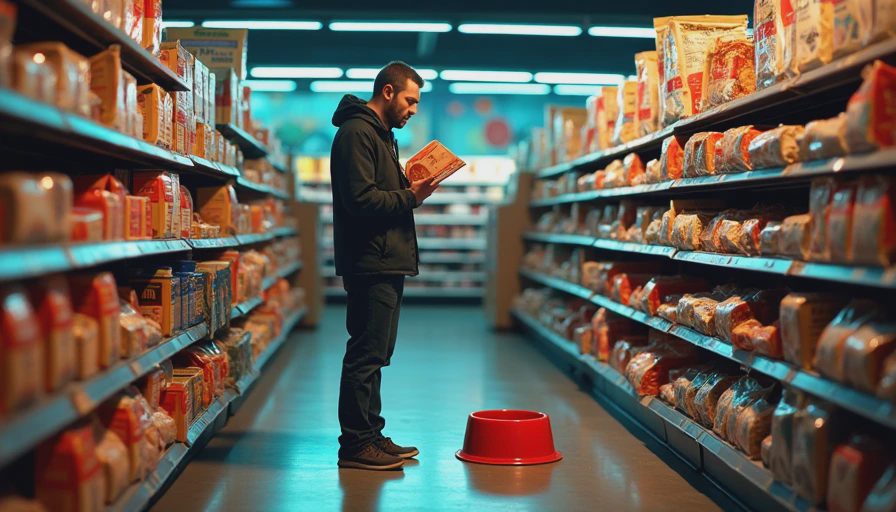
When a client asks about grain free dog food, I usually start by putting the bag on the counter and asking one simple question: why this food? Some dogs do fine on it, but most do not need it. If your dog has itchy skin, loose stool, or you are trying to sort through a stack of online advice, grain-free is not automatically the answer. The chart matters more than the marketing.
What grain free dog food actually means
Grain free dog food simply means the recipe leaves out common grains such as wheat, corn, rice, barley, and oats. That does not make it low carbohydrate, and it does not make it hypoallergenic. Most grain-free formulas replace those grains with potatoes, sweet potatoes, peas, lentils, chickpeas, or a mix of all four. Your dog still gets calories from starch, just from a different source.
That is where a lot of owners get misled. The front of the bag may say limited ingredient, ancestral, or premium, but those words are marketing, not a nutrition diagnosis. What I care about first is whether the food is complete and balanced for your dog’s life stage. A puppy needs a growth formula. An adult dog needs adult maintenance. A large-breed puppy needs careful calcium and calorie control. If the label does not clearly say complete and balanced, that is a red flag before you even look at the ingredient list.
Price is another clue. A 30-pound bag from a mainstream brand often lands around $50 to $85. Boutique grain-free bags can run $70 to $120 or more. More expensive does not automatically mean better nutrition.
When grain free dog food is worth it
This is the part where grain free dog food gets more complicated. There are a few dogs that do better on it, but the reason is usually not because grains are evil. True grain allergy is uncommon. When a dog has a food allergy, the trigger is more often a protein such as chicken, beef, dairy, or egg. Itchy skin, ear infections, and chronic licking are the classic complaints, but those signs can also come from fleas, environmental allergies, or a skin infection.
If I truly suspect food allergy, I do not recommend random bag hopping. I recommend a real elimination diet, usually with a hydrolyzed protein or a carefully chosen novel protein. That trial takes 8 to 12 weeks and has to be strict. No flavored chews, no table scraps, no one-off treats from the counter.
So yes, some dogs may end up on a grain-free recipe during that process, but the label itself is not the treatment. The diet plan is the treatment. That is where the chart actually matters.
The health question I ask in the exam room
Here is what the chart actually says: I do not call grain free dog food a poison, but I also do not call it automatically safer. The reason is the concern about dilated cardiomyopathy, or DCM, in some dogs eating certain grain-free diets, especially recipes heavy in peas, lentils, chickpeas, or potatoes. The science is not fully settled, and not every grain-free formula is linked to the problem, but the signal was strong enough that most veterinarians pay attention.
The dogs I watch a little more closely are breeds already known to be at higher risk for heart disease, such as Dobermans, Boxers, Great Danes, and Cocker Spaniels. If a dog on a grain-free diet develops a cough, exercise intolerance, fainting, or a new heart murmur, that is not the time to shrug and keep feeding the same bag.
I do not want owners to panic over a single headline. I do want them to ask whether the food has a good reason to be there. If your dog is healthy, thriving, and eating a diet with solid nutritional backing, that is a very different situation from a dog whose owner picked a trendy formula because the internet said grains are toxic.
How to compare labels without getting lost
The front of the package is the least useful part. Start on the back with the nutritional adequacy statement. Look for complete and balanced, and make sure the food fits your dog’s stage of life. Then look for the company behind it. Brands like Purina Pro Plan, Hill’s Science Diet, Royal Canin, Iams, and Eukanuba put real money into nutrition research, feeding trials, and quality control. That does not make every other brand bad, but it does tell you who is doing the work.
I also like to know whether the company employs veterinary nutritionists and whether it runs feeding trials, not just formulation on paper. Those details matter more than whether the first ingredient is salmon, bison, or sweet potato. A first ingredient sounds impressive, but dogs do not read ingredient lists. They care about digestibility, nutrient balance, and whether the food fits their body.
If you are comparing two bags and one costs $20 more, ask what you are getting for that money. Sometimes the answer is better quality control. Sometimes it is better marketing and a prettier photo on the front.

Better options for most dogs
For most healthy dogs, I start with the simplest answer: a complete and balanced diet from a manufacturer with a strong nutrition program. If the dog is doing well on chicken and rice, there is no prize for changing it. If the dog has a sensitive stomach, I usually think about digestibility, feeding schedule, parasites, and treats before I blame grains.
If the problem is itchy skin, I would rather do a structured diet trial than let an owner bounce from one grain-free bag to another. If the problem is weight gain, the better move is usually a calorie-controlled formula, measured meals, and fewer extras from the counter. If the dog is a puppy, I want growth nutrition, not a fashionable adult formula that just happens to have a wolf on the bag.
A lot of owners pay extra for grain-free because they think it is the healthy choice. Sometimes it is. Often it is just expensive. If the food solves a real problem, great. If it only solves the marketing problem, save the money.
A simple way to decide
If your dog is healthy and eating well, I would not switch just because grain-free sounds cleaner. If your dog has skin, ear, or stomach issues, I would not keep changing foods blindly either. Get the medical problem sorted first, then choose the diet that fits the diagnosis instead of the trend.
If you want grain free dog food because you like the ingredient profile, bring the bag to your next visit and let the chart do the talking.


No letters yet — be the first to write.