The Saturday Morning Experiment
Luke is ten. He likes baseball, Minecraft, and asking questions that start with “But why?” at the exact moment you are trying to finish a thought. One Saturday I decided to see whether the same curiosity could be pointed at a chemistry panel.
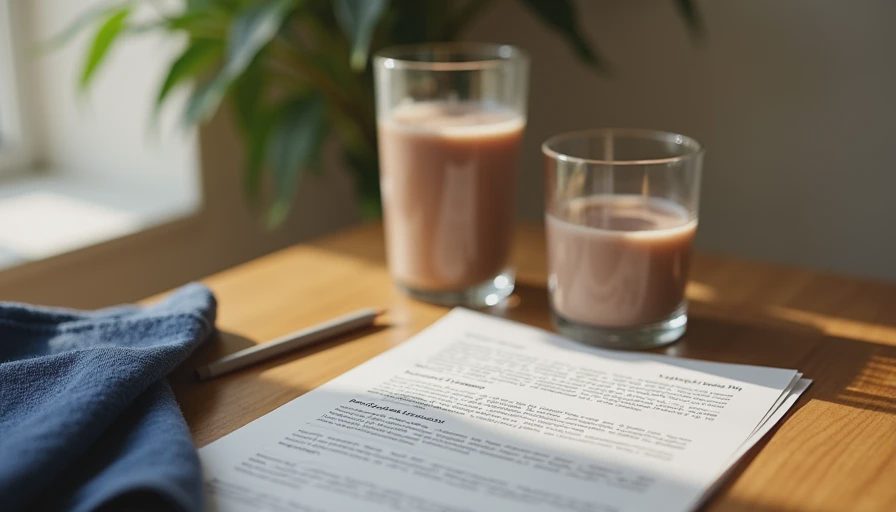
I printed a normal canine CBC and chemistry from a recent patient (name removed, values typical). We sat at the kitchen table with the report, a pencil, and two glasses of chocolate milk. The goal was modest: help him understand that numbers on a page can tell a story about how a body is working, and that the story is more interesting than it first looks.
What Held His Attention (and What Did Not)
The big picture landed. “So these numbers are like the dog’s report card for how the organs are doing?” Yes. Exactly.
The individual line items were more uneven.
White-blood-cell count: interesting once I framed it as the body’s army.
Liver enzymes: eyes glazed until I compared them to warning lights on a dashboard.
Kidney values: better—he already knew kidneys “clean the blood” from a school unit.
Electrolytes: lost him completely. Even chocolate milk could not save sodium and potassium.
We lasted twenty-three minutes before he asked whether we could go outside and throw a ball. That is, for the record, longer than most adults stay focused when I review the same panel in the exam room.
The Parts That Actually Stuck
Three days later he surprised me. We were driving and he asked, “If the kidney numbers are high, does that mean the dog is drinking more water?” He had remembered the polyuria connection. Another afternoon he pointed at our own cat and said, “Gus should get his blood checked because he’s old.” The idea that invisible numbers could predict visible problems had taken root, even if the specific reference ranges had not.
I did not expect him to become a junior pathologist. I hoped he would see that science is not only something that happens in a classroom or on a screen—it is a way of paying attention to the living things right in front of us.
Parenting at the Intersection
Veterinary medicine sits in the middle of science and daily life in a way few other jobs do. The same lab values I interpret for clients are, at home, a chance to show a child that careful observation and evidence matter. It is also a chance to show that not every question has a dramatic answer. Sometimes the report is normal and the most interesting finding is that everything is quietly working.
Luke does not need to know the difference between ALT and AST. He does need to know that guessing is less useful than looking, and that “I don’t know yet” is a respectable place to stand while you gather more information. Those lessons transfer to baseball statistics, friendship drama, and later, bigger decisions.
What I Would Do Differently Next Time
Shorter. One page, three values maximum.
More visual. Draw the organs and arrows instead of relying on the printed columns.
End with an action. Let him help me check Gus’s water intake or feel for ribs on the family dog so the numbers connect to something he can touch.
Attention spans at ten are honest. They tell you when the material has exceeded the available curiosity. Respecting that limit keeps the door open for the next conversation instead of closing it with overload.
Why This Belongs in the Lake House Column
Most of the posts on this site are about other people’s animals and the decisions that happen in the exam room. Lake House is for the parts that happen after the white coat comes off—the moments when the same habits of observation and evidence meet ordinary family life.
Teaching Luke to look at a lab report was not about producing a future veterinarian. It was about letting him see that the quiet work of paying attention has value, and that the people who do it are still just parents who also happen to know what BUN stands for.
He still prefers throwing a ball. That is fine. The next time a number appears in his world—whether it is a growth chart, a grade, or a pet’s bloodwork—he may remember that the number is only the beginning of the story.
Let the chart do the talking. Sometimes the chart is shared at the kitchen table with chocolate milk.
No letters yet — be the first to write.