The Cat Who Owns the Place
His full name on the medical record is Gustav, but nobody calls him that. He is Gus. Sixteen pounds of orange-and-white pragmatism with a notched left ear and the unshakable confidence of a creature who has never once paid rent.
Gus arrived as a half-grown stray in 2017, limping and suspicious, and simply never left. We treated the limp, ran the bloodwork, updated the vaccines, and waited for someone to claim him. No one did. By the third week he had claimed the highest shelf in the treatment room and the softest chair in the office. By the third month he was greeting clients at the front desk like he owned the mortgage.
I have been a veterinarian for sixteen years. Gus has been on the premises for nine of them. If you count hours spent in the building, he has seen more patients than I have.
The Unofficial Job Description
Gus has no formal duties and performs all of them diligently.
He supervises suture removals from the top of the towel cabinet.
He provides silent moral support to nervous cats by occupying the exact center of the exam-room floor and refusing to move.
He absorbs anxiety from waiting-room dogs by presenting his rear end for inspection and then walking away mid-sniff, a masterclass in boundaries.
He has been known to sit on the lap of a grieving owner without being asked, which is more than I have ever managed to do with the same grace.
Technicians swear he can sense which patients need extra time and which ones need to be left alone. I am more skeptical of feline telepathy, but I have watched him choose the exact cat carrier that contains the most terrified patient and park himself beside it like a furry security detail. Correlation is not causation. It is, however, good for business.
The Medical Record That Writes Itself
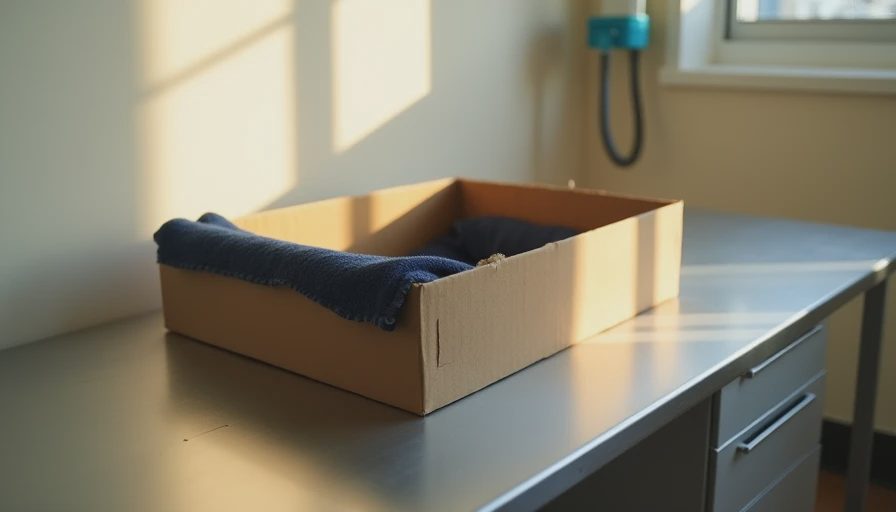
Gus has his own chart. It is mostly empty of diagnoses and full of notes such as “still orange,” “claimed new cardboard box,” and “attempted to steal deli turkey from staff lunch.” He receives annual bloodwork because we believe in leading by example, and because the day we skip it is the day he will develop something dramatic out of spite.
He has lived through three practice-management software migrations, two major remodels, and the great frozen-pipe crisis of 2022. He has been locked in the building overnight at least four times and was found each morning sleeping on the heated surgery table, offended that no one had left a pillow.
Clients ask about him almost as often as they ask about their own pets. New graduates learn quickly that “How’s Gus?” is part of the local dialect. When we hire, the unofficial test is whether the candidate automatically scratches the exact spot under his chin that makes one hind leg thump. Those who pass tend to stay longer.
What Gus Has Taught the Humans
Veterinary clinics can feel like places of bad news and hard decisions. Gus is living proof that the same building also contains routine, absurdity, and the ordinary comfort of a cat who shows up every day and demands nothing more complicated than a clean litter box and occasional admiration.
He has made more than one euthanasia appointment slightly less impossible simply by existing in the hallway afterward. He has turned the most stoic clients into people who pull out their phones to show photos of their own cats. He has forced every staff member to learn the difference between “I want food” meows and “you sat in my chair” meows, a skill that turns out to transfer surprisingly well to reading subtle patient signals.
Most of all, he has reminded us that not every animal who walks through the door needs to be fixed, upgraded, or optimized. Some of them just need a place to be, and in return they make the place better.
The Lake House Connection
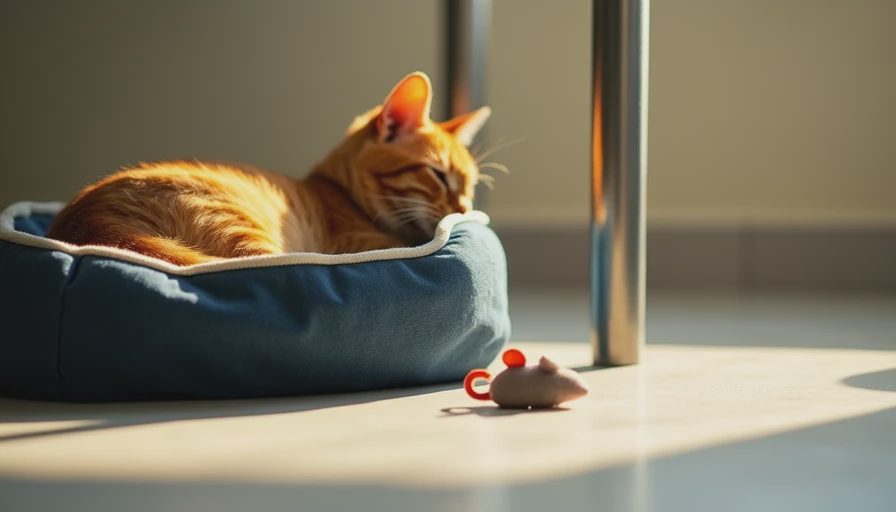
At home we have our own cats and the usual chaos of kids, boots, and winter gear. Gus remains a clinic cat by firm preference. He has been invited to the house. He has declined with the kind of clarity only a cat can project. His territory is the treatment room, the front desk, and the patch of afternoon sun that moves across the surgery floor between two and three o’clock.
Karen still keeps a can of his preferred food in her locker “just in case.” Luke and Hazel have both tried to negotiate taking him home for a weekend. Gus has vetoed every proposal by simply disappearing into the ceiling tiles until the idea blows over.
Why He Belongs in This Column
Lake House posts are for the parts of this work that do not fit neatly into exam findings or evidence reviews. Gus is the living embodiment of that category. He is not a case study. He is not a cautionary tale. He is the soft, stubborn, slightly judgmental heart of the building where the rest of the stories happen.
If you ever visit the clinic, he will likely be on the front desk when you arrive. You may scratch his ear. He may allow it. He may also stand up and walk away mid-scratch, because his shift is over and the sun patch is calling.
Either way, he will have logged another patient interaction, bringing his unofficial total even further ahead of mine.
Some doctors measure their careers in surgeries performed or lives saved. I measure part of mine in the steady presence of an orange cat who decided, years ago, that this particular exam room was home.
Let the chart do the talking. Sometimes the chart is a cat.
No letters yet — be the first to write.