The exam room was quiet except for the rustle of a food bag on the scale. A young Labrador had soft stool, and his owner had brought three screenshots of conflicting online advice. This is where a discussion of aafco dog food brands usually starts: not with a dramatic ingredient list, but with the dog's age, body condition, medical history, and the nutritional statement on the package.
AAFCO stands for the Association of American Feed Control Officials. It is not a pet food company, and it does not approve individual foods or publish a list of brands that are automatically safe. Instead, AAFCO develops model regulations and nutrient profiles that state feed regulators use when evaluating pet food labels. The useful information for you is the AAFCO nutritional adequacy statement, usually printed in small type on the back or side of the bag.
What the AAFCO statement actually tells you
Look for wording such as, "Animal feeding tests using AAFCO procedures substantiate that this product provides complete and balanced nutrition for maintenance of adult dogs." That sentence gives you several important facts. The food is intended to be complete and balanced, it is formulated for adult maintenance, and the company is saying how it established that claim.
A food can also be labeled complete and balanced because it was formulated to meet an AAFCO nutrient profile. Neither route makes the food perfect for every dog, but both are more meaningful than front-of-bag phrases such as premium, holistic, ancestral, or natural. A product labeled for intermittent or supplemental feeding is not designed to be a dog's sole diet. Treats, toppers, and some homemade recipes fall into that category.
Life stage matters. Puppies need growth nutrition, while adult dogs need maintenance nutrition. Large-breed puppies have additional concerns involving mineral balance and controlled growth, so I look for wording specifically addressing growth, including growth of large-size dogs when appropriate. A senior label is useful marketing information, but senior diets do not have a separate universal AAFCO nutrient profile. The actual formula and the dog's health still matter more than the word senior.
Comparing aafco dog food brands without getting lost
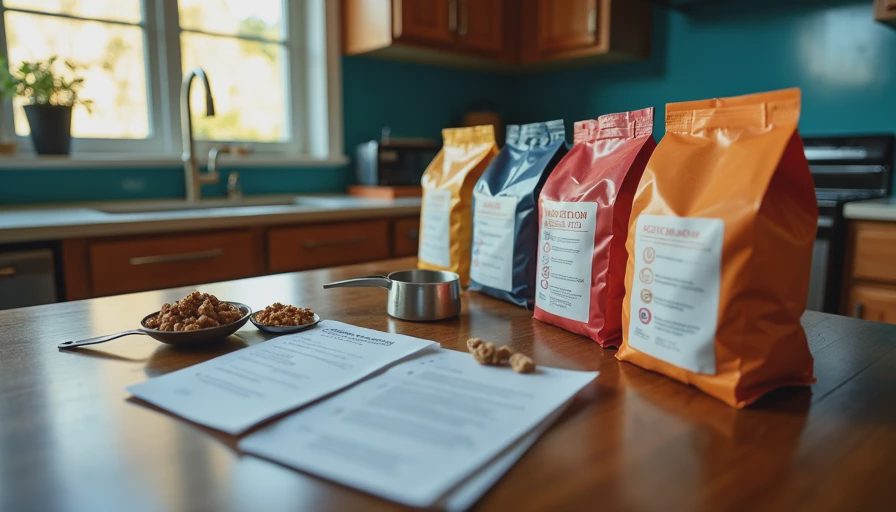
When clients ask me to compare aafco dog food brands, I start with four practical questions. Is the food complete and balanced for the correct life stage? Does the manufacturer provide a reliable customer service line and clear feeding directions? Has the company invested in nutrition expertise and quality control? Finally, does the dog eat it willingly while maintaining a healthy weight and normal stool?
Common veterinary-recommended options include Purina Pro Plan, Hill's Science Diet, Royal Canin, Iams, and Eukanuba. These companies offer formulas for puppies, adults, seniors, different body sizes, and selected medical needs. Their products are not identical, and a higher price does not guarantee a better result for your particular dog. Iams or another moderately priced complete diet may be entirely reasonable for a healthy adult dog. A prescription diet from Hill's, Royal Canin, or Purina is a different category and should be used for a specific medical purpose with veterinary guidance.
I also pay attention to the manufacturer's ability to answer detailed questions about formulation, ingredient sourcing, nutrient analysis, and quality testing. A company that can explain who formulates its diets and how it checks finished products gives me more confidence than a label built mainly around emotional language. AAFCO compliance is a starting point, not the whole evaluation.
Ingredients, grain-free claims, and the information gap
The ingredient list has a role, but it is easy to overinterpret. Ingredients appear by weight before cooking, so fresh meat can move high on the list partly because it contains substantial water. A named grain is not automatically a filler, and a by-product is not automatically dangerous. Many by-products are nutrient-rich organ tissues that dogs can digest well.
Grain-free food is not automatically healthier, and grain-inclusive food is not automatically inferior. Some dogs have a diagnosed food allergy, but true food allergies are less common than owners often assume. Dogs with itchy skin may instead have environmental allergies, fleas, infection, or another problem requiring an examination. If your dog has persistent itching, vomiting, diarrhea, or weight loss, changing brands repeatedly can delay the useful diagnostic work.
There has also been ongoing concern about diet-associated heart disease reports involving some diets, particularly diets with unusual formulations and substantial amounts of certain legumes or potatoes. The science is not simple enough to label every grain-free diet harmful, and it is not sensible to panic over one ingredient. I prefer a complete, balanced diet from a manufacturer with strong nutrition and quality-control resources unless a dog's medical plan calls for something else.
How to choose a food for your own dog
Start by writing down your dog's age, current weight, activity level, body condition, and any diagnosed condition. A healthy, lean, moderately active four-year-old mixed-breed dog has different needs from a growing Great Dane, a sedentary eight-year-old Beagle, or a dog with kidney disease. This short profile narrows the field faster than reading hundreds of online reviews.
Next, find the adequacy statement and confirm that it matches the life stage. Then compare calorie information, because feeding amounts are not interchangeable between formulas. If one food contains 350 calories per cup and another contains 450, using the same measuring cup amount can gradually change body weight. A kitchen scale is inexpensive and often more accurate than estimating a scoop.
Make a transition over about seven days by mixing increasing amounts of the new food with the old one. A sensitive dog may need longer. Loose stool during a change does not prove the new food is dangerous, but repeated vomiting, refusal to eat, facial swelling, breathing trouble, or marked lethargy deserves prompt veterinary attention.

What a real exam-room recommendation sounds like
For a healthy adult dog at an ideal weight, my affordable first option is usually a reputable, complete-and-balanced adult diet that the dog tolerates well. That might be a standard formula from Iams, Purina, Hill's, Royal Canin, or another established manufacturer. I do not recommend paying extra for a boutique label simply because its package shows a wolf or lists exotic meat.
If the dog has chronic diarrhea, recurrent ear infections, urinary disease, pancreatitis, obesity, or kidney changes, the calculation changes. A targeted therapeutic diet can cost more, but the cost-benefit question includes fewer flare-ups, better stool quality, and clearer medical management. In that situation, a random over-the-counter food marketed for sensitive stomachs may not provide the controlled nutrition needed for diagnosis or treatment.
This is also why online rankings of aafco dog food brands have limited value. They cannot account for your dog's blood work, body condition, medication, or response over time. A food that works beautifully for one dog can produce excess calories or poor stool in another. Let the chart do the talking: weight trend, appetite, stool, skin, energy, and laboratory results are more useful than a viral ingredient claim.
A simple label-checking routine
Before buying, check the intended species, life stage, complete-and-balanced statement, calorie content, expiration date, and feeding directions. Confirm that the bag has not been damaged and store dry food in a cool, dry place, ideally in its original bag inside a clean container. Wash bowls regularly and measure portions consistently.
Keep treats and table food modest. Many dogs gain weight through extras rather than their main diet, especially when several family members reward the same behavior. Treat calories should fit into the daily plan, and dental chews count too. If you change foods, write down the date and watch body weight and stool for the next two to four weeks.
The best aafco dog food brands are not necessarily the trendiest or most expensive. They are the ones that provide appropriate complete nutrition, come from a company willing to answer technical questions, and support a healthy body condition in your dog. When a medical problem is present, ask your veterinarian for a specific nutrition plan instead of trying to solve symptoms through label shopping alone.




No letters yet — be the first to write.