The Scale Is Not the Only Tool That Matters
Most owners who want to help their dog lose or maintain weight start with the same two actions: they buy a “light” food and they guess at the amount. Three months later the dog looks the same or the owner is frustrated and the bag is half-eaten by the rest of the household.
Weight management fails at home for the same reason many medical plans fail: it has no feedback loop. You need a simple chart that tells you whether the current plan is working before the next bag is empty. Here is the system I teach clients. It uses almost no equipment beyond a kitchen scale or measuring cup, your hands, and a note on your phone.
Step 1: Learn the Body-Condition Score You Can Feel
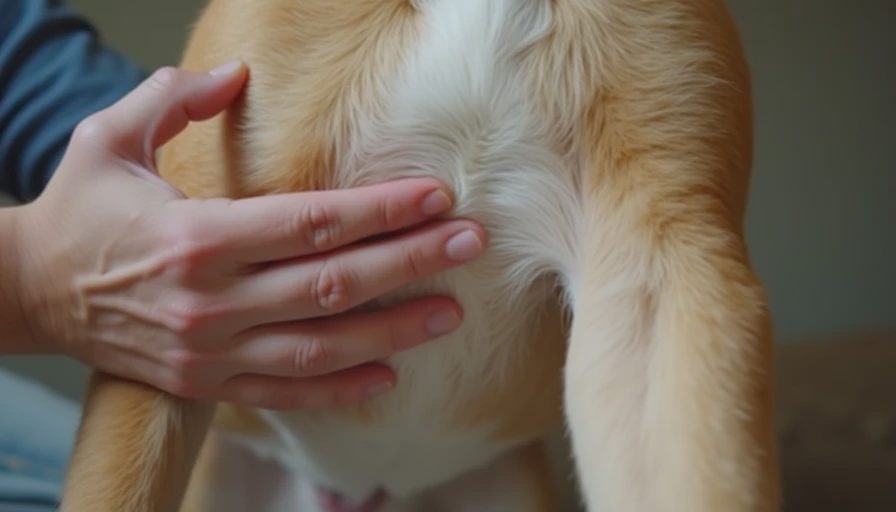
Forget the ideal-weight number on the bag for a moment. The most useful number is the body-condition score (BCS) you can assess with your hands.
On a 1–9 scale we aim for 4 or 5 for most dogs:
You should feel the ribs easily under a thin layer of fat, like the back of your hand.
Looking from above, there should be a visible waist behind the ribs.
Looking from the side, the abdomen should tuck up, not hang level or sag.
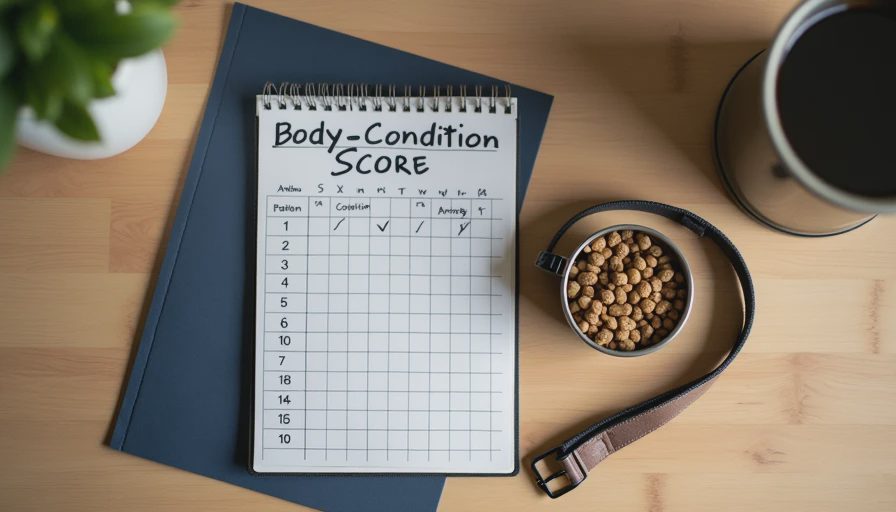
Practice this once a week on the same day, after the dog has eliminated and before a meal. Write down the score and one short note (“ribs easy / waist clear” or “ribs hard to feel / no waist”). That note becomes the first column of your home chart.
Step 2: Establish the Current Calorie Baseline
Weigh the dog if you have a scale, or get an accurate weight at the clinic and use that as the starting point. Then measure exactly what the dog is eating right now—including treats, dental chews, and food used for training. Convert everything to approximate calories using the bag information or a quick online calculator.
Most owners are surprised by the treat total. The chart needs the real number, not the ideal one.
Step 3: Set a Modest Target and a Weekly Review
For weight loss we usually aim for 1 % of body weight per week or less. Faster loss increases the risk of muscle loss and rebound. For maintenance we simply hold the current calories and watch the BCS.
Create a simple weekly entry:
Date
BCS (hands + visual)
Weight if available
Total daily calories fed that week
Any change made
That is the entire chart. Five lines. Once a week.
Step 4: Adjust by Small, Measurable Steps
If the BCS is not moving after two weeks, change the daily calories by 10 % and hold the new amount for another two weeks. Do not make large swings. Do not change food and amount and treat policy all at once—you will not know which variable mattered.
If the dog is losing too fast or seems hungry and restless, add a small amount of low-calorie volume (green beans, pumpkin, or a measured portion of a weight-management wet food) rather than abandoning the plan.
Step 5: Treats and Household Consistency
Treats must be counted inside the daily calorie total. A practical rule that works for many families: 90 % of calories from the measured meals, 10 % from treats. Weigh or pre-portion the treat allowance for the day so it is visible and finite.
Everyone in the household has to use the same system. The most common reason a chart stalls is the second person who “just gives a little something” every evening.
What Success Looks Like on the Chart
You will see the BCS number improve before the collar needs a new hole. Muscle should stay firm over the hindquarters and back; we are trying to lose fat, not strength. Energy and willingness to exercise usually increase as the extra weight comes off. Those observations belong in the notes column.
If the chart is flat for a month despite honest calorie control, it is time for a clinic visit. Some dogs need a metabolic work-up, a different food density, or a supervised plan with more precise numbers.
How This Fits the Rest of the Home Chart
Pair the weekly BCS check with the five-minute monthly exam you already know. Feel the ribs, note the waist, glance at the calorie log. The whole routine stays short and becomes as ordinary as scooping the litter box or filling the water bowl.
Weight management is not a thirty-day challenge. It is a feedback system. When the chart is simple enough to keep, most dogs and most owners can stay on it.
Let the chart do the talking—especially the one you keep on the kitchen counter.



No letters yet — be the first to write.