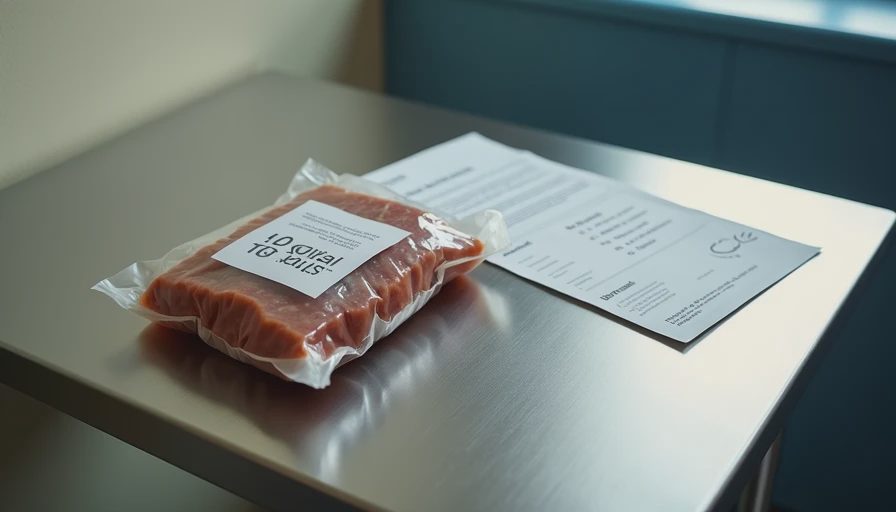
The Question That Arrives With a Cooler Bag
“I’ve been feeding raw for six months. The coat looks great. But is it actually better? Or am I taking unnecessary risks?”
I hear some version of this several times a month. Raw feeding has moved from the fringes into mainstream conversation. Proponents cite ancestral logic, shinier coats, cleaner teeth, and smaller stools. Critics point to bacterial contamination, nutritional imbalances, and public-health concerns. Both sides can sound very certain.
The literature is less certain and more specific than either camp usually admits. Here is what the studies and reviews actually show, without the marketing or the scare headlines.
What “Raw” Usually Means in Practice
Commercial raw diets (frozen or freeze-dried) and home-prepared raw diets are not the same thing. Commercial products vary widely in whether they meet AAFCO nutrient profiles and whether the company conducts pathogen testing. Home-prepared diets depend entirely on the recipe and the owner’s consistency.
Most of the stronger claims—and most of the documented problems—cluster around diets that are truly raw (not high-pressure processed or lightly cooked) and that contain muscle meat, bones, and organs with little or no further treatment.
Nutritional Adequacy: The Quiet Problem
Several analyses of home-prepared and some commercial raw diets have found incomplete or excessive levels of key nutrients. Calcium-to-phosphorus ratios are a frequent issue when bone content is guessed rather than calculated. Fat-soluble vitamins, trace minerals, and essential fatty acids can fall outside recommended ranges.
A diet can produce a glossy coat and firm stools while still being short on nutrients that matter over years rather than weeks. Coat and stool are visible; chronic low-level imbalances often are not. The studies that actually assay finished diets (rather than relying on recipe claims) repeatedly flag this gap.
Commercial raw diets that meet AAFCO standards through formulation or feeding trials address this better than most home recipes. Many homemade versions do not.
Bacterial Contamination: The Risk That Is Measurable
Raw meat, by definition, has a higher likelihood of carrying Salmonella, Listeria, Campylobacter, and other pathogens than commercial cooked kibble or canned food. Multiple surveys of commercial raw products have found contamination rates that are low in absolute terms but consistently higher than processed pet foods.
For healthy adult dogs the absolute risk of clinical illness appears relatively low. For puppies, geriatric animals, immunocompromised pets, and households with young children, elderly adults, or immunocompromised humans, the risk calculation changes. Dogs can shed Salmonella in feces without looking sick, turning the household environment into a potential exposure source.
High-pressure processing reduces but does not eliminate this risk. Freezing does not reliably kill these organisms.
The Claims That Are Harder to Support
Dental health: Raw bones can reduce some tartar through mechanical abrasion. They can also fracture teeth and cause intestinal obstruction or perforation. The net benefit is not clearly superior to proven dental-care methods (brushing, dental diets, professional cleaning) when risks are included.
Digestibility and stool volume: Some dogs produce smaller, firmer stools on raw diets. This is often cited as proof of superior digestibility. It can also reflect lower fiber or different ingredient sets. Smaller stools alone are not evidence of better long-term health.
“Ancestral” superiority: Modern dogs are not wolves, and most commercial raw diets do not closely resemble the actual diet of wild canids. The evolutionary argument is appealing and largely untestable in controlled studies.
What the Evidence Supports in 2026
Nutritionally complete and balanced raw diets can be fed successfully to many healthy adult dogs when the formulation is sound and handling is careful.
The bacterial risk is real, quantifiable, and higher than with conventional processed foods.
Home-prepared raw diets frequently fail to meet established nutrient profiles unless they are built by a veterinary nutritionist and followed precisely.
There is no robust body of evidence that raw diets produce longer lifespans or lower rates of chronic disease compared with high-quality cooked diets when both are complete and balanced.
Certain medical conditions (some gastrointestinal diseases, immune compromise) make raw feeding a poor risk-benefit choice.
How I Counsel Owners Who Want to Feed Raw
I do not start with a ban. I start with the individual animal and household.
If the owner is committed, I ask whether they are using a commercial product that meets AAFCO standards or a home recipe. If home-prepared, I recommend a board-certified veterinary nutritionist formulate it. I discuss safe handling (separate utensils, thorough cleaning, no free-roaming raw meat on counters). I talk about the household members who might be at higher risk.
I also offer the middle paths that often get lost in the debate: gently cooked commercial fresh diets, high-quality kibble rotated with wet food, or therapeutic cooked diets when medical needs exist. Many of the benefits people seek from raw (moisture, ingredient control, palatability) can be achieved with lower bacterial risk.
The Bottom Line From the Literature
Raw feeding is not automatically dangerous, nor is it automatically superior. It is a feeding strategy with a measurable contamination risk, a higher chance of nutritional incompleteness when done at home, and a set of claimed benefits that currently exceed the strength of the supporting evidence.
If you choose it, choose the version that is complete, balanced, and handled with the same care you would give any raw meat in your kitchen. If you choose not to, you are not depriving your dog of some essential ancestral birthright. You are selecting a different point on the risk-benefit curve.
The studies are not as dramatic as the social-media posts on either side. They are, however, clearer than the marketing.
Let the chart—and the actual data—do the talking.




No letters yet — be the first to write.