
The Reminder That Arrives Like Clockwork
“Your dog is due for a dental cleaning.”
Many clinics send that message every twelve months. Some owners treat it as non-negotiable. Others treat it as optional upselling. Both reactions miss the more useful question: what does this individual mouth actually need?
Professional dental cleaning under anesthesia is one of the highest-value procedures we perform when disease is present. It is also a procedure that carries real (if low) risk and real cost. The evidence does not support a universal yearly schedule for every dog. It supports a schedule driven by the chart—the oral exam findings, the breed and age risk, and the home-care reality.
What the Literature and Guidelines Actually Say
Periodontal disease is extremely common in dogs. By age three, a large percentage show some degree of gingivitis or early periodontitis. Progression is not linear or identical across individuals. Small breeds, brachycephalic dogs, and dogs with crowded or retained teeth tend to develop disease earlier and more severely. Large breeds with good occlusion and consistent home care often progress more slowly.
Major veterinary dental organizations emphasize regular oral assessment and intervention based on findings, not a fixed calendar interval. The goal is to treat disease when it is present and to prevent progression, not to anesthetize every dog on its birthday.
There is no high-quality evidence that a strictly annual cleaning in a mouth with minimal disease improves long-term outcomes compared with cleanings timed to visible need. There is clear evidence that established periodontitis continues to damage bone and soft tissue until it is addressed.
What I Look at Before I Recommend a Cleaning
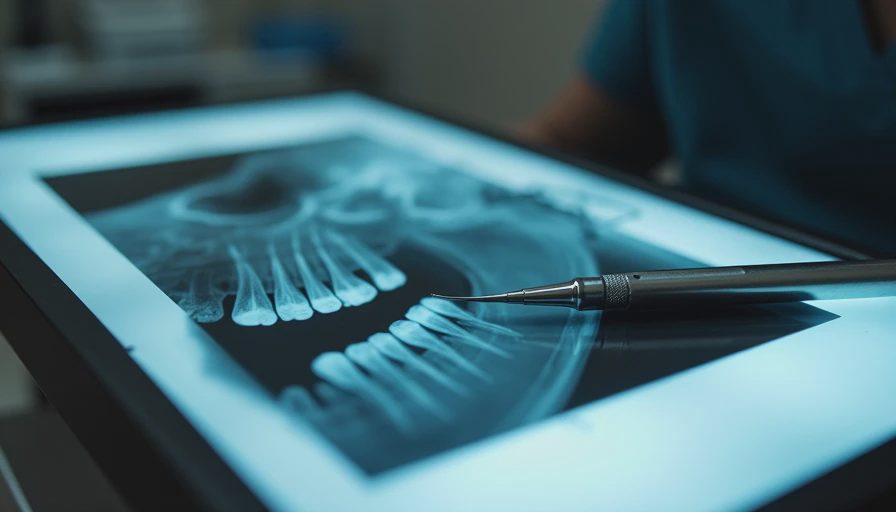
The oral exam itself
Gingivitis, calculus coverage, gingival recession, tooth mobility, furcation exposure, and oral pain on probing or chewing history matter more than the date of the last procedure. A dog with stage 1 disease and good home care may go longer. A dog with stage 2–3 disease and no home care needs attention sooner, regardless of the calendar.
Breed, age, and occlusion
A five-year-old Yorkshire Terrier with crowded teeth and visible calculus is a different risk profile from a five-year-old Labrador with clean premolars and minimal gingivitis.
Home-care consistency
Daily or near-daily brushing, effective dental diets, or proven water additives change the trajectory. Owners who cannot or will not perform home care will need professional intervention more often. That is not a moral judgment; it is a practical forecast.
Previous dental radiographs and findings
Once we have a baseline set of full-mouth radiographs, we can track progression of bone loss and make more precise recommendations. A mouth that looked clean last year and still looks clean this year does not automatically need the same treatment.
The Risks of Both Over- and Under-Treatment
Anesthetizing a healthy dog with minimal dental disease every twelve months exposes that dog to repeated anesthetic events that may not be medically necessary. Skipping cleanings for years in a dog with progressive periodontitis allows pain, bone loss, and potential systemic inflammation to continue.
The rational middle path is assessment-driven intervals. Some dogs need professional care every 12 months. Some need it every 6–9 months. Some can safely go 18–24 months with good home care and stable exams. The chart decides.
How I Talk About It With Owners
I show them what I am seeing—on the teeth, on the gums, and on radiographs when we have them. I explain the stage of disease in plain language. Then I give a clear recommendation tied to those findings, not to a generic policy.
If the mouth is healthy and home care is solid, I say so and lengthen the interval. If disease is present, I explain what will happen if we wait and what the procedure will address. Owners make better decisions when they can see the actual mouth instead of arguing with a reminder card.
What Owners Can Do Between Professional Cleanings
Daily brushing remains the single most effective home measure. Dental diets with proven plaque and tartar claims, appropriate chews, and water additives can help but do not replace mechanical removal of plaque. Annual (or more frequent) oral exams under light restraint in the clinic let us catch progression early.
If your dog will not allow brushing, we can discuss alternatives and adjust the expected professional interval accordingly. Honesty about what is realistic at home produces a better long-term plan than an ideal protocol that never happens.
The Bottom Line
Yearly dental cleanings are appropriate for many dogs and too frequent or too infrequent for others. The evidence supports examining the individual mouth, staging the disease, factoring in breed and home care, and then setting the interval. A calendar alone is not a chart.
When the oral exam, the radiographs, and the history say it is time, we schedule the procedure. When they say the mouth is stable, we can wait and keep watching. That approach protects dogs from both unnecessary anesthesia and unnecessary disease progression.
Let the chart do the talking—especially the one inside the mouth.


No letters yet — be the first to write.