The Emergency That Started With a Missing Sock
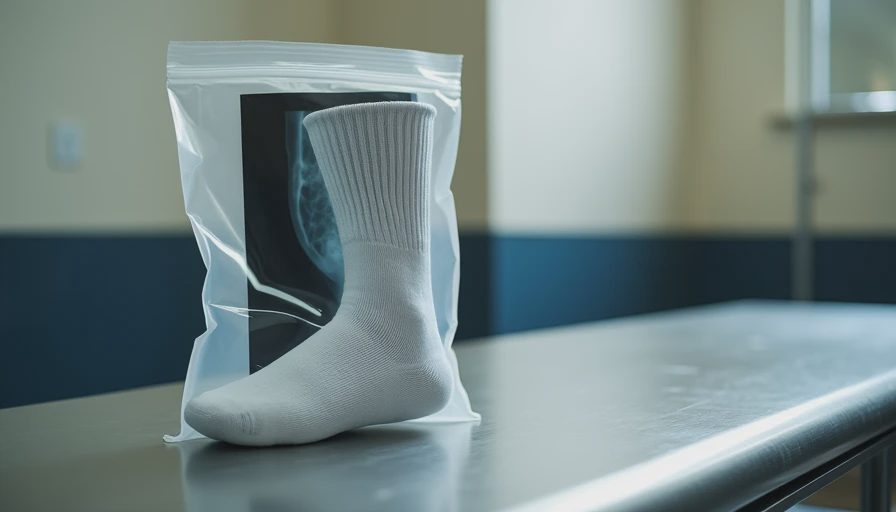
It was a Tuesday evening when the call came in. A four-year-old Chihuahua named Pico had been acting “a little quiet” after the kids finished laundry. One white ankle sock was missing. Pico had a history of stealing socks, but until that day he had only chewed them. This time the sock was gone and Pico had vomited once—clear fluid, no sock in sight.
The owner’s exact words were: “He’s still wagging his tail. Can we just watch him overnight and see?”
I have heard some version of that sentence hundreds of times. Sometimes watching is exactly right. Sometimes it is the moment we lose the easy option. Pico’s case is a clean illustration of how we decide which is which.
First Look: What the Chart and the Dog Actually Said
Pico walked into the exam room on his own. That was the first data point—still ambulatory, still interested in the room. Heart rate was elevated but consistent with a small dog in a strange place. Gums were pink and moist. Abdomen felt soft on the first pass, but he tensed when I focused on the mid-abdomen.
No fever. No obvious pain on spinal or orthopedic palpation. The single episode of vomiting and the missing sock were still the loudest facts in the room.
Radiographs came next. Not because every sock eater needs films, but because a complete sock is a high-risk foreign body: large enough to obstruct, absorbent enough to create a partial blockage, and unlikely to pass cleanly in a ten-pound dog.
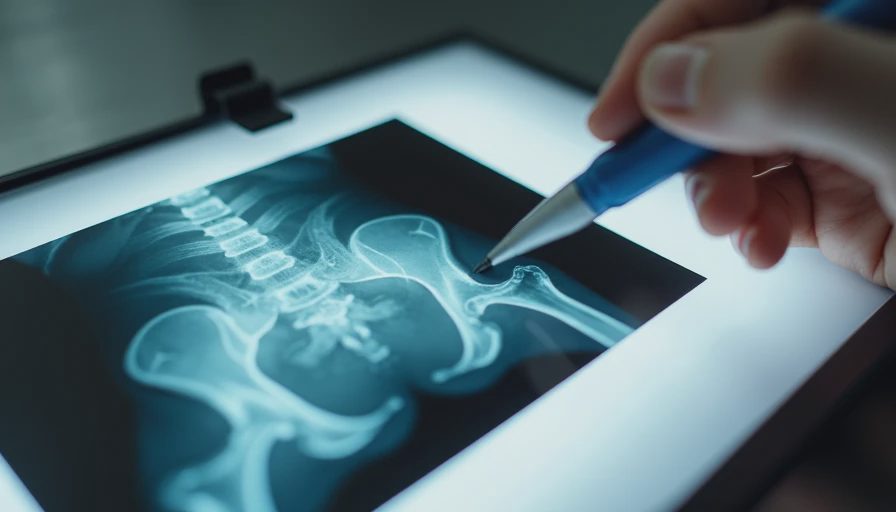
The films showed a mottled, soft-tissue opacity in the stomach with a small amount of gas downstream. Not a textbook metallic foreign body, but consistent with fabric. No free air, no obvious severe dilation. The chart was beginning to talk.
Why “Wait and See” Carries Real Risk Here
Owners often hear that dogs can pass foreign objects. That is true for many things—small rubber pieces, bits of stick, the occasional sock fragment. A whole athletic sock in a Chihuahua is different.
Fabric can ball up. It can create a partial outflow obstruction. It can become a lead point for intussusception. It can sit in the stomach for days while the dog looks only mildly off, then tip into full obstruction or gastric injury. The longer it stays, the higher the chance that simple endoscopic retrieval turns into a more complicated surgery.
In Pico’s case the combination of confirmed ingestion, vomiting, abdominal discomfort, and radiographic support moved us out of the pure “watchful waiting” column. We still had a window for a less invasive approach, but that window was not infinite.
The Conversation We Had Before Any Procedure
I laid the options out in order of invasiveness and cost, the same way I do with every foreign-body case:
Induction and endoscopic retrieval under anesthesia—if the sock is still in the stomach and can be grasped.
If endoscopy fails or the sock has already moved into the intestine, surgical removal.
The true “wait and see” path: hospitalization for IV fluids, serial exams and films, and readiness to intervene if the picture worsens.
I explained the probabilities as honestly as the data allowed. Endoscopy is not guaranteed success with fabric, but it is far less invasive than surgery when it works. Waiting at home without monitoring carried a meaningful chance of coming back in worse shape, with fewer options and higher cost.
The owners chose endoscopy that evening.
What We Found and How It Ended
Under anesthesia the scope entered a stomach that contained one very soggy, very intact white sock. It took patience and the right grasping instrument, but the sock came out in one piece. No perforation, no residual material. Pico recovered smoothly and went home the next morning on a short course of stomach protectants and a strict “no laundry privileges” protocol.
Two weeks later he was back to stealing (and this time only chewing) socks again. Some lessons stick better than others.
How I Decide “Wait” Versus “Act” in Real Time
Not every foreign body needs a procedure the day it is eaten. The decision rests on a short list of factors I run through every time:
Object type and size relative to the patient
Whether the object is still causing clinical signs
Radiographic or ultrasound evidence of obstruction or significant delay
Time since ingestion
The individual dog’s overall status and the owner’s ability to monitor closely
A single episode of vomiting after a dog eats something small and smooth can often be monitored at home with clear return instructions. Repeated vomiting, lethargy, abdominal pain, or imaging that shows a persistent foreign body moves the case into active management.
The goal is never to operate on every sock. The goal is to avoid the 2 a.m. emergency surgery that could have been a controlled endoscopy twelve hours earlier.
What Owners Can Do Before They Even Reach the Clinic
If you know or strongly suspect your dog has eaten a non-food item:
Note the time and what the object was.
Do not induce vomiting unless a veterinarian specifically tells you to—some objects do more damage coming back up.
Check for ongoing vomiting, retching, lethargy, or abdominal discomfort.
Call us early rather than waiting for the dog to “look really sick.” Early information keeps options open.
And if you have a known sock thief, laundry basket management is cheaper than any procedure I can offer.
The Larger Point This Case Makes
“Wait and see” is a legitimate medical plan when the data support it. It becomes a gamble when we use it to avoid a decision rather than to gather more information. Pico’s sock could have passed. It also could have turned into a much longer, more expensive, and more dangerous story. The chart—history, exam, and imaging—told us the risk was high enough to act while the procedure was still straightforward.
That is the quiet work of the exam room. Not every case needs heroics. Every case needs a clear-eyed look at the odds while the window is still open.
Let the chart do the talking.


No letters yet — be the first to write.