At 7:40 on a rainy Tuesday morning, a Labrador arrived at my clinic with a wet, red patch behind her ear. Her owner had found it the night before and applied three different products from the bathroom cabinet. This is a common exam-room situation. Hot spots on dogs can look dramatic within hours, but the appearance alone does not tell us whether the trigger was fleas, an allergy, an ear infection, or simple irritation. The useful first step is to slow down, examine the skin, and stop the licking cycle.
What a hot spot actually is
A hot spot is an area of acute moist dermatitis, meaning the skin becomes inflamed, damp, painful, and often infected after a dog scratches, licks, or chews one small area repeatedly. The original itch might be minor. Once the dog damages the surface, moisture and bacteria create more irritation, which causes more chewing. That feedback loop explains why a spot the size of a dime can become a palm-sized lesion by dinner.
Hot spots on dogs most often appear on the head, neck, hips, or limbs, although any reachable skin can be affected. The hair may be stuck together with serum or pus, and the surrounding skin can smell sour or feel warm. A dog may act cheerful otherwise, so a normal appetite does not rule out a painful lesion. Long-haired and thick-coated dogs are especially prone after swimming, bathing, or getting caught in humid weather because moisture stays close to the skin.
The chart rarely says “mysterious skin problem.” It usually gives us a pattern: sudden onset, intense itch, a moist surface, and a reachable location. That pattern helps distinguish a hot spot from ringworm, a deeper abscess, a bite wound, or a skin tumor, all of which can require different treatment.
Why hot spots start in the first place
The immediate cause is self-trauma, but the underlying reason matters. Flea allergy is high on my list, even when an owner has not seen a flea. A single bite can make a sensitive dog chew at the tail base or lower back. Environmental allergies can cause recurrent licking of the feet, belly, armpits, or face. Ear infections are another frequent source: a dog scratches behind one ear until the skin breaks, then develops a lesion beside the ear canal.
Other triggers include a damp coat, mats pulling on the skin, contact irritation from a plant or grooming product, and orthopedic pain that leads to repeated licking over a joint. Dogs with thick coats can hide a small wet patch for several days. By the time the owner parts the hair, the area may be much larger than expected.
Hot spots on dogs that return every few weeks deserve an underlying-cause workup rather than repeated surface treatment. The affordable starting point may be a careful flea-control review and an ear examination. The gold-standard plan could include skin cytology, allergy management, treatment for a bacterial or yeast infection, or a diet trial when food allergy is genuinely suspected. Let the chart do the talking instead of guessing from a social media photograph.
Safe first aid before the appointment
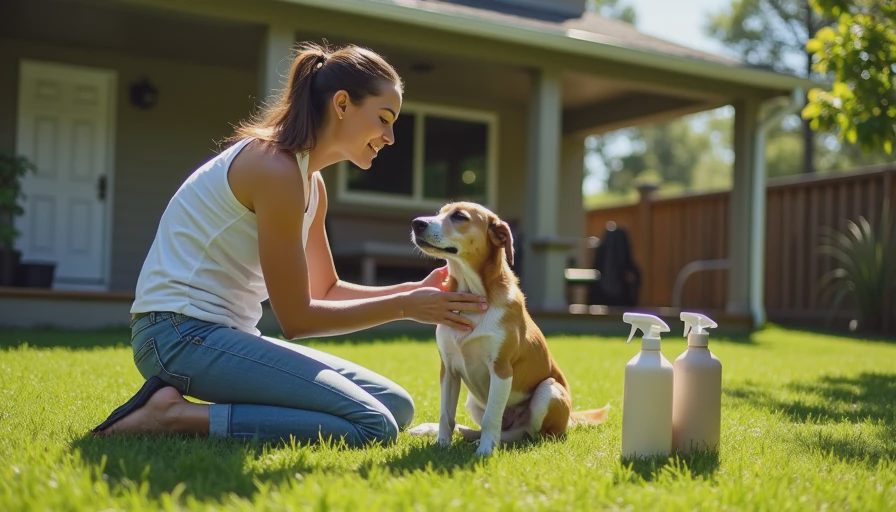
If your dog is calm and the lesion is small, gently clean the surface with lukewarm water or a veterinary-approved cleansing product. Pat it dry with a clean towel; rubbing can tear fragile skin. If the hair around the lesion is long, do not use scissors close to the skin. Clippers are safer, but a painful dog may snap, and forcing the issue can turn a manageable visit into an emergency. In many cases, leaving the trimming to the veterinary team is the sensible choice.
Prevent licking with an Elizabethan collar, often called a cone. An inflatable collar can help with some body locations, but it does not reliably block access to the hip, tail base, or hind leg. Keep bedding dry, skip swimming, and do not cover the lesion with a tight bandage unless a veterinarian has shown you how. Avoid hydrogen peroxide, rubbing alcohol, essential oils, human steroid creams, and leftover antibiotics. These can delay healing, irritate tissue, or mask important signs.
Hot spots on dogs can become considerably more painful overnight. Arrange a veterinary appointment promptly if the area is expanding, has a strong odor, contains thick discharge, bleeds easily, or sits near the eye or ear. Same-day care is also appropriate if your dog cannot settle, cries when touched, seems feverish, or stops eating.
What happens at the veterinary visit
I start by asking when the lesion appeared, how quickly it changed, whether the dog swims or gets groomed, and what parasite prevention is being used. Then I inspect the entire dog, not just the obvious patch. A quick look at both ears, the paws, belly, and tail base often reveals the primary itch that caused the damage.
For a superficial lesion, treatment may involve clipping and cleaning, a topical medication, and a short course of medication to control itch. If cytology shows substantial bacteria or yeast, the plan changes. Some dogs need oral antibiotics, antifungal treatment, or prescription anti-inflammatory medication. A cone is often part of the treatment, not a punishment; it protects the work being done while the skin repairs itself.
Many straightforward cases cost roughly $100 to $250 for an examination, cleaning, and basic medication, while complicated or recurrent cases can cost more when testing and longer-term allergy care are needed. Your veterinarian should explain the least expensive reasonable step and what finding would justify moving up the treatment ladder.
Preventing another flare-up
Prevention depends on the trigger. Use reliable flea control consistently, including during colder months if your veterinarian recommends year-round protection. Dry your dog thoroughly after rain, bathing, or swimming, and check under collars, harnesses, and dense fur. Regular brushing helps you find mats, damp skin, and small irritated areas before they become large wounds.
If allergies are suspected, prevention may include wiping paws after outdoor walks, bathing with a veterinary shampoo, managing secondary infections, or using prescription itch control. There is no single best allergy plan for every dog. Ear disease needs its own diagnosis and treatment; cleaning an infected ear with random over-the-counter products can make discomfort worse.
When hot spots on dogs keep recurring, take clear photographs at the first sign and note the date, location, weather, grooming, foods, and flea treatment. That simple record can reveal a seasonal pattern or show that every lesion follows an ear flare-up. It also gives your veterinarian something more useful than “it happens sometimes.”
When home care is not enough
A small, dry irritation that stops bothering your dog after gentle cleaning may be reasonable to monitor briefly. A moist, enlarging, painful lesion is different. Skin infections can extend beyond what you can see through the coat, and aggressive scratching can create wounds that need more than a topical product. Do not wait several days while trying one internet remedy after another.
The practical rule I give clients is simple: protect the area from licking, keep it clean and dry, and book an examination when the lesion is spreading or your dog is uncomfortable. Hot spots on dogs are usually treatable, but finding the reason for the itch is how you prevent the next one. Take one photograph today, put on the cone if needed, and let your veterinarian examine the skin before the cycle grows.



No letters yet — be the first to write.